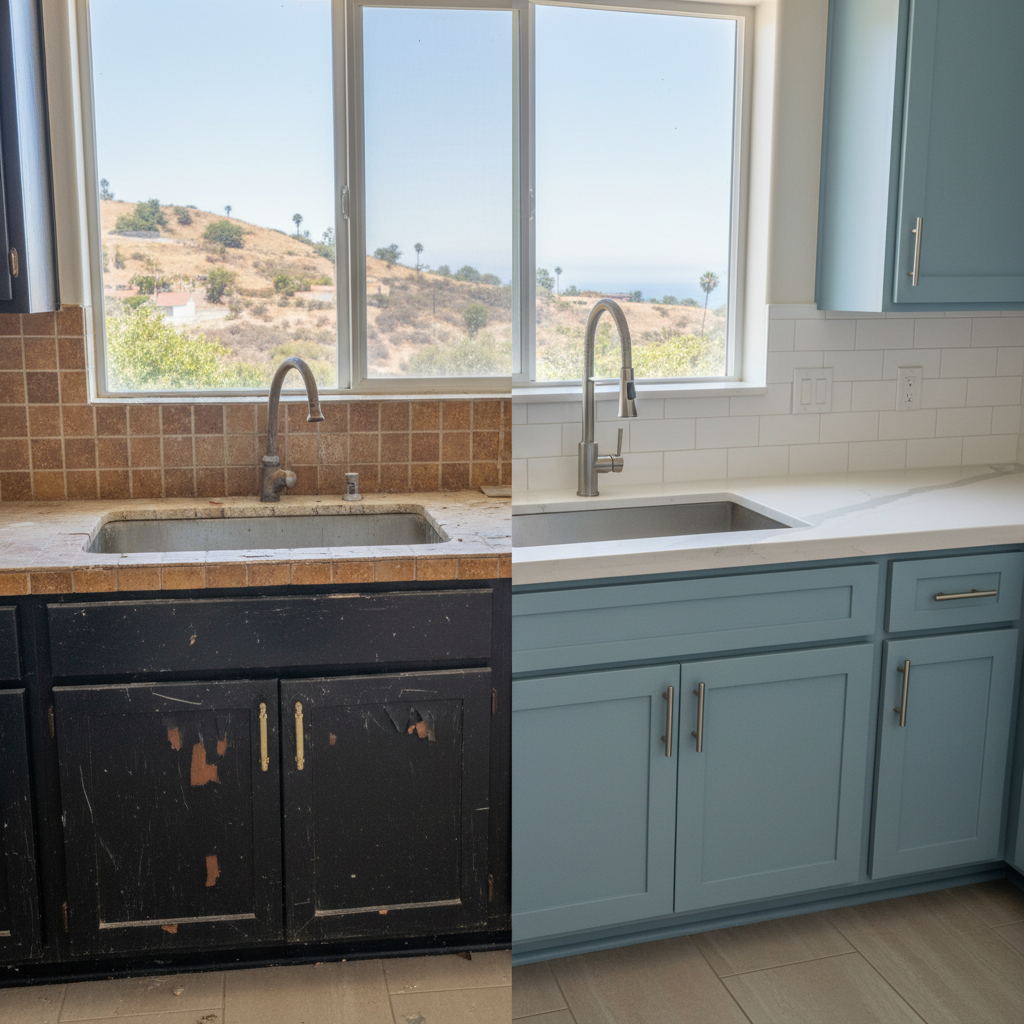
Alright, Ventura homeowners, let's talk about countertops. When you're upgrading your kitchen, this is one of the biggest decisions you'll make, isn't it? It's not just about how it looks; it's about how well it holds up, how easy it is to live with, and, of course, what it'll cost you. I see a lot of folks wrestling with two main approaches: going with a big, beautiful slab, or opting for the more modular tile. Both have their place, but they're definitely not the same thing.
Slab Countertops: That Seamless Look
When I say 'slab,' I'm talking about materials like granite, quartz, marble, or even solid surface products. These come in large, continuous pieces. We cut them to fit your kitchen perfectly, often with very few seams – sometimes none at all, depending on your layout. Pretty slick, right?
The Good Stuff About Slabs:
- Appearance: This is where slabs really shine. You get a seamless, elegant look that's tough to beat. The natural patterns in granite or marble, or the consistent look of quartz, are just stunning. It feels high-end, because it is.
- Durability: Most slab materials are incredibly tough. Quartz, in particular, is engineered to be non-porous and super resistant to scratches, stains, and heat. Granite is tough too, though it does need sealing. They can really take a beating from daily kitchen life.
- Maintenance: Generally, very easy. No grout lines to scrub! A quick wipe-down is usually all you need. For natural stone like granite, you'll need to seal it periodically (every year or two, depending on how much action it sees), but that's a pretty straightforward DIY job.
- Resale Value: A beautiful slab countertop is a huge selling point for any home. It instantly upgrades the kitchen's perceived value, no doubt about it.
The Downsides of Slabs:
- Cost: This is the big one. Slabs are almost always more expensive upfront than tile. You're paying for the material itself, the custom fabrication, and the specialized installation.
- Installation: It's a precise job. Measuring has to be spot-on, and moving those heavy slabs takes a skilled crew and specialized equipment. This isn't a DIY project for most folks, trust me.
Tile Countertops: Versatility and Value
Tile countertops have been around forever, and for good reason. They're made up of individual tiles – ceramic, porcelain, natural stone – laid over a base and joined with grout.
The Good Stuff About Tile:
- Cost: Generally, tile is the more budget-friendly option. The materials themselves are cheaper per square foot, and installation can be less complex. That could save you on labor if you're handy.
- Versatility: You've got an endless array of colors, patterns, sizes, and textures. You can create unique designs, borders, and even integrate decorative pieces. If you want a specific Mediterranean vibe that fits some of the older homes in the Pierpont area, tile can absolutely get you there.
- Repairability: If a tile cracks or gets damaged, you can often replace just that one tile. That's a lot easier and cheaper than replacing an entire slab, wouldn't you agree?
- Heat Resistance: Most ceramic and porcelain tiles are very heat resistant, so you don't have to worry too much about hot pans.
The Downsides of Tile:
- Grout Lines: This is the main complaint. Grout can stain, it can be tough to clean, and it's susceptible to mildew if not properly sealed and maintained. It definitely breaks up the visual flow of the counter.
- Uneven Surface: Even with a perfect installation, you'll have slight variations in height between tiles and the grout lines. This isn't ideal for rolling dough or sliding things across the counter.
- Durability (of grout): While the tiles themselves are durable, the grout is the weak link. It can crack, chip, or crumble over time, especially in high-traffic areas.
- Perceived Value: While a well-done tile counter can look great, it generally doesn't carry the same 'luxury' perception or boost to resale value as a slab.
My Take for Ventura Homes
Look, I've installed plenty of both here in Ventura. For most of my clients at All Things Kitchen Solutions, especially those looking for a long-term investment, a clean look, and minimal fuss, I'm going to lean towards slab countertops.
Here's why: We live in a coastal environment. While Ventura isn't as humid as some places, the constant use, the occasional open windows bringing in sea air, and just general kitchen life means grout lines on tile counters are going to be a constant battle to keep clean and pristine. They'll show wear faster, and that seamless, easy-to-wipe-down surface of a slab just makes daily life simpler. Plus, the durability of quartz or sealed granite means you're investing in something that'll look great and function perfectly for decades.
Now, if you're on a tighter budget, or you have a very specific aesthetic in mind that only tile can achieve – maybe a Spanish Colonial revival look for a home up in the hills – then tile can absolutely be a good choice. Just be prepared for the grout maintenance. If you go that route, invest in high-quality, stain-resistant grout and keep it sealed.
Ultimately, it comes down to your priorities: budget, aesthetics, and how much maintenance you're willing to do. Think about how you use your kitchen, how long you plan to stay in your home, and what kind of look you're going for. Either way, make sure you're working with someone who knows what they're doing. A bad installation, whether it's tile or slab, will cause headaches down the road.