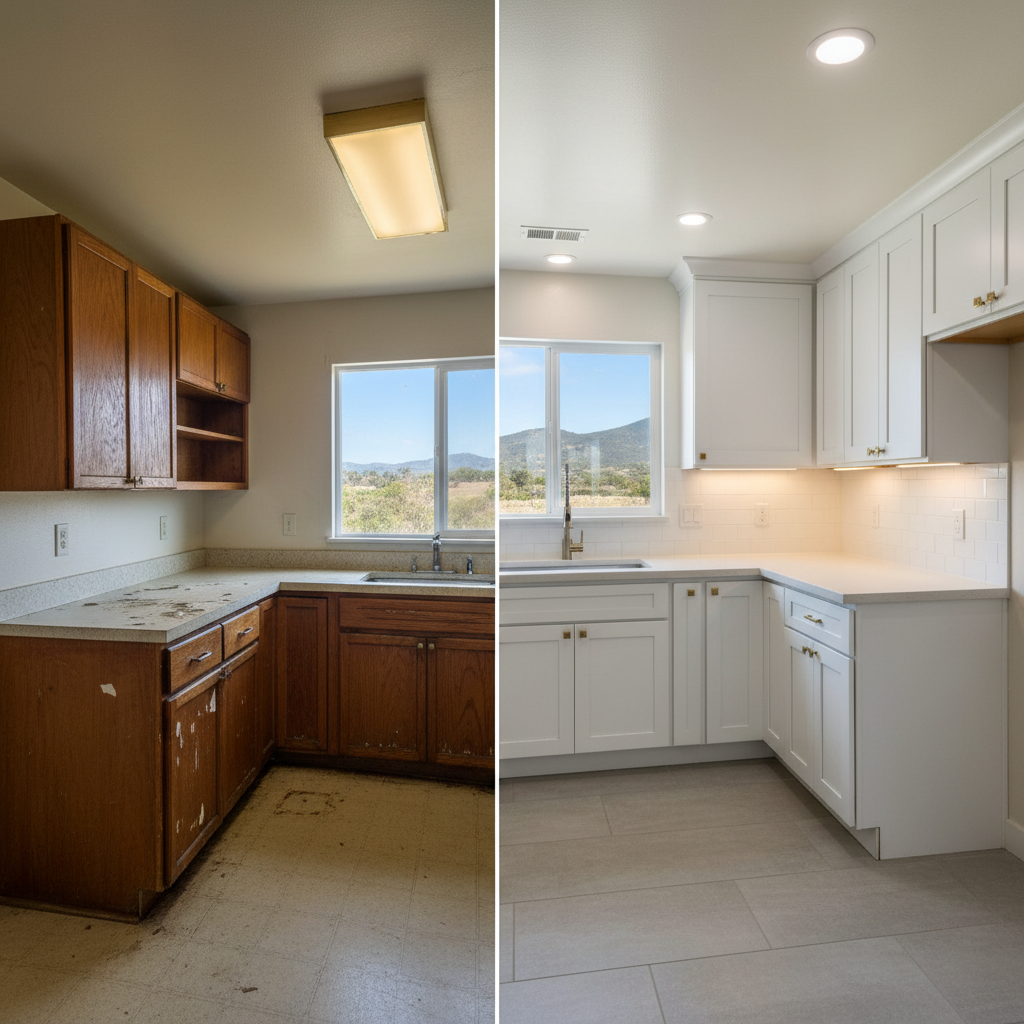
Alright, let's talk kitchen lighting. It's not just about seeing what you're doing, you know? It's about setting the mood, making your kitchen feel bigger, and really showing off those beautiful countertops you just installed. A common decision folks here in Ventura face is whether to go with recessed lighting or surface mount fixtures. Both have their place, sure, but they're definitely not interchangeable. I've seen plenty of kitchens, from the older homes in Midtown to the newer builds up in the hills, and I can tell you there's usually a clear winner for most situations.
Recessed Lighting: That Clean, Modern Look
Recessed lights, often called can lights, tuck right into your ceiling. All you really see is a trim ring, because the light source itself is hidden. This gives you a super clean, uncluttered look. It's why they're so popular in modern and contemporary kitchens, of course.
The Good Stuff:
- Aesthetics: They practically disappear. If you're going for a sleek, minimalist vibe, this is your best bet. No bulky fixtures hanging down to break up the ceiling line.
- Even Illumination: When you plan it right, a grid of recessed lights can really spread ambient light evenly across your whole kitchen. You won't end up with dark spots or harsh shadows, which is nice.
- Value: Many homebuyers see recessed lighting as an upgrade, so it can add a little something to your home's perceived value.
The Not-So-Good Stuff:
- Installation Cost: This is usually where recessed lighting gets pricier. You're cutting holes in your ceiling, running new wiring, and dealing with the space above the ceiling. If you've got a second story above your kitchen, it's generally easier. But if it's a vaulted ceiling or a flat roof, like some of the mid-century moderns around town, it can get complicated and expensive. You'll often need an electrician for the install, and sometimes drywall repair after, too.
- Insulation Issues: Cutting holes in your ceiling for recessed cans can mess with your attic insulation, which means heat loss or gain. You'll want to make sure you use IC-rated (insulation contact) fixtures and seal them up properly, especially with our hot summers.
- Limited Style: While they're clean, the style options for the visible trim are somewhat limited. You're not really making a design statement with the fixture itself.
Surface Mount Lighting: Versatility and Character
Surface mount fixtures, as the name suggests, mount directly onto the surface of your ceiling. Think flush mounts, semi-flush mounts, chandeliers, and pendant lights. These are the fixtures that are actually meant to be seen.
The Good Stuff:
- Cost-Effective Installation: Generally, surface mount lights are much easier and cheaper to install. If you've already got an existing electrical box in the ceiling, it's often a simple swap. Less cutting, less wiring, less labor.
- Design Statement: This is where you can really inject some personality into your kitchen. There are endless styles, finishes, and sizes of surface mount fixtures. You can go rustic, industrial, traditional, or ultra-modern — whatever fits your style.
- Good for Low Ceilings: If your kitchen has lower ceilings, a flush mount fixture is a great way to get good light without making the room feel cramped.
- Easy Maintenance: Changing a bulb or cleaning the fixture is usually a breeze since it's all accessible.
The Not-So-Good Stuff:
- Visual Clutter: If you use too many or the wrong size, surface mount fixtures can make your ceiling feel busy or even lower.
- Shadows: Depending on the type and placement, you might get more shadows than you would with a well-designed recessed lighting plan. This is especially true for single, central fixtures.
- Dust Catchers: Some designs can accumulate dust and grease more easily than recessed lights, requiring more frequent cleaning.
My Take and Recommendation
Here's the deal: for most Ventura kitchens, I usually recommend a combination. But if I had to pick one primary approach for general ambient lighting, it's recessed. Why? Because they offer that clean, even light that just makes a kitchen feel bigger and brighter without drawing attention to the fixtures themselves. They're a solid, long-term investment in your home's functionality and aesthetic.
However, don't ditch surface mounts entirely! They're fantastic for specific purposes. A beautiful pendant light over an island or a dining nook? Absolutely. A stylish semi-flush mount in a smaller kitchen or a pantry for some character? Perfect. Under-cabinet lighting (which is often a type of surface mount or strip lighting) is also non-negotiable for task lighting on your counters, no matter what you do overhead.
When All Things Kitchen Solutions designs a kitchen, we often look at layers of light: recessed for general ambient, under-cabinet for task, and then decorative pendants or a chandelier for accent and style. It gives you the best of all worlds, doesn't it?
So, if you're gutting your kitchen or doing a major ceiling overhaul, spend the extra on recessed lighting for your main ambient light. You won't regret the clean lines and bright, even illumination. Then, pick out some killer surface mount fixtures to add that personal touch where it counts. It's all about balance and what works best for your space and how you use it.